

Why ‘stunning’ in German might be costing you guests
If you work in tourism, you will have seen this pattern countless times before. The English original uses an emotive adjective, which the German translation simply mirrors. On the surface, nothing looks amiss. But underneath, the language becomes so generic that it could apply to any hotel anywhere in the world. It’s not wrong. It's just forgettable. And forgettable content doesn't sell holidays.
HUMAN TRANSLATIONTOURISMMARKETINGTIPS
12/13/20253 min read
Why ‘stunning’ in German might be costing you guests
If you work in tourism, you will have seen this pattern countless times before. The English original uses an emotive adjective, which the German translation simply mirrors. On the surface, nothing looks amiss. But underneath, the language becomes so generic that it could apply to any hotel anywhere in the world.
It’s not wrong but it's forgettable. And forgettable content doesn't sell holidays.
Let’s look at a common example from hotel and destination copy. The English version says:
“A cosy room with stunning views.”
Straightforward. Familiar. Harmless.
Then comes the standard German translation:
“Ein gemütliches Zimmer mit atemberaubendem Ausblick.”
Backtranslation: “A cosy room with breathtaking views.”
It sounds bold enough, but it doesn't show anything. There's no picture, just mood. The traveller still can’t picture where they’d wake up or what they’d see when they pulled the curtains back.
Now let’s compare that with a version that paints something specific:
“Ein gemütliches Zimmer mit Blick über die Bucht.”
Backtranslation: “A cosy room with a view across the bay.”
You can almost feel the shift, can't you? One line tries to impress. The other creates a moment. Suddenly, we have something real: a mental snapshot of a balcony in the morning light, perhaps accompanied by the sound of seagulls and someone deciding where to have breakfast.
This tiny shift from adjective to image changes everything.
Generic adjectives rely on the reader’s imagination. Visual language provides the imagination with something tangible.
Why vague adjectives weaken tourism copy
Tourism content doesn’t usually struggle because the destination is boring. It struggles because the language fails to help the traveller immerse themselves in the moment.
Words like 'stunning', 'breathtaking', 'spectacular' and 'amazing' are everywhere. Once a word is used too much, it loses its impact. They stop saying anything at all.
Even worse, when translated directly, these adjectives can make a sentence sound more impressive than it actually is. 'Atemberaubend' is used so often that it has become background noise.
Visual language, on the other hand, provides the mind with something tangible to focus on:
a setting
a sensory detail
a hint of a story
It invites the reader to experience it before they have even booked.
Why visual translations convert better
Making a booking is an emotional decision. Either your text helps the traveller take that leap, or it doesn't.
When you provide readers with a vivid description, their brain starts filling in the rest. They imagine the room. The view. They experience the feeling of being there. They do half the selling for you.
Flowery writing is not something that will convince anyone, but clarity is incredibly persuasive.
A quick example from real life
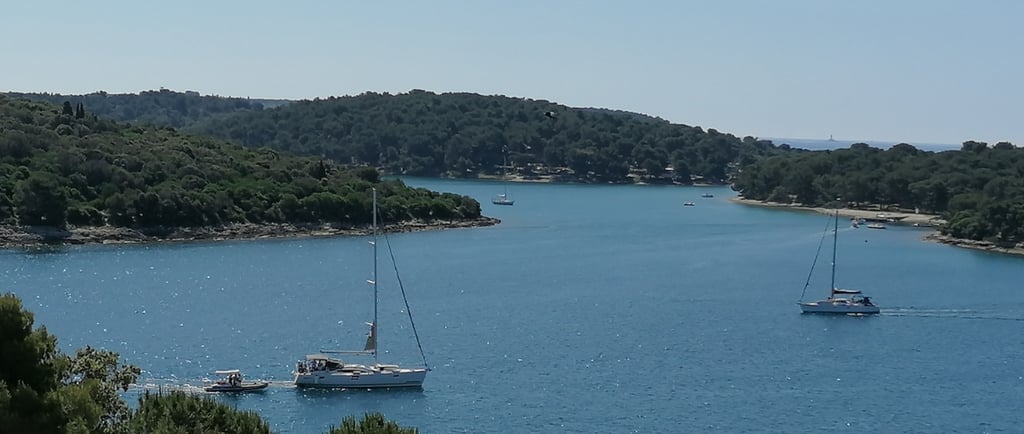
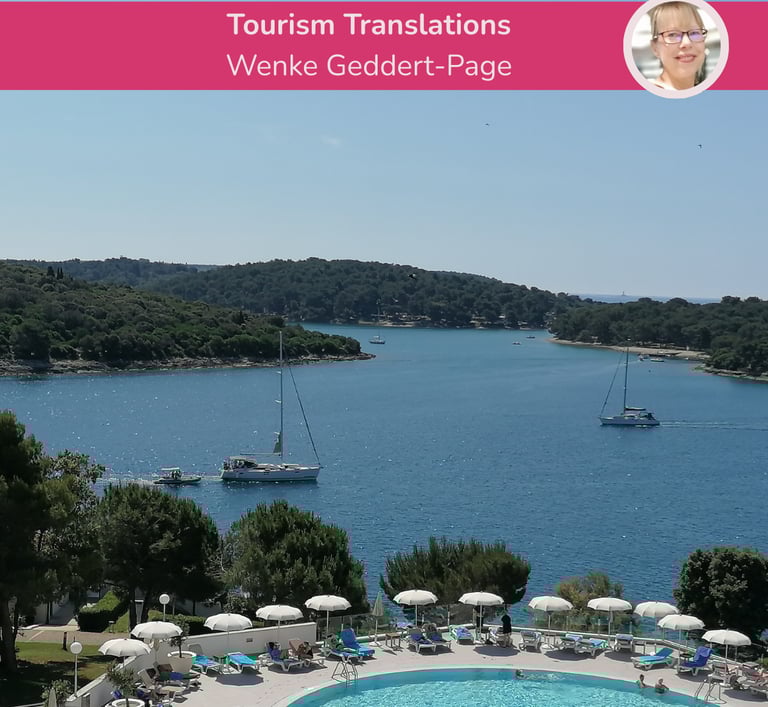
Which photo did I use for this blog? It's a fabulous view of the bay from a hotel where I stayed on holiday. It's a view that doesn't need any dramatic embellishment, such as "stunning" or "breathtaking". The image speaks for itself.
That’s exactly how good tourism copy should work: One part inspiration, one part precision, zero fluff.
How to spot weak adjectives (and upgrade them)
When editing English-German tourism copy, ask yourself these two simple questions:
Does the sentence still convey meaning if I remove the adjective? If not, the adjective was doing all the work, and doing it badly.
Can I replace the vague word with a visual detail? Not more words. Not a heavier sentence. Just something that someone could picture.
A detail could refer to a direction (“across the bay”), a setting (“directly at the marina”), a feature (“with access to the rooftop terrace) or a moment (“perfect for your morning coffee”).
A small shift with a big impact on conversion rates.
#TravelMarketing #TranslationServices #ContentCreation #GermanTranslation #TourismContent #HospitalityMarketing #TourismTranslations #TranscreationExpert #HotelCopywriting
© Wenke Geddert-Page/Tourism Translations, 2024–2025 – Policies: AI | Privacy Policy | T&Cs | Website Disclaimer